Highlights
The Bachelor of Science in Computer Science and Information Technology (B.Sc. CSIT) at Prithvi Narayan Campus is one of the programs that has gained popularity among students seeking quality IT education. This is a 4-year (8- semester) course designed by Tribhuvan University to provide the students with all sorts of knowledge in the field of information technology and computing. Introduced in the year 2073 BS 92016AD) with only 36 students, the program has taken significant momentum in its journey to the present. Initially, the program was run in the Statistics department building and Science laboratory. Later the classes were shifted to the M.Sc. Program Block. The classes have been running in the IT Building since 2078.
The program involves, theoretical classes as well as a great deal of practical and project work. The program aims at developing the underlying principles of both computer science and information technology and showing how these principles can be applied to deal with real world problems. This program is expected to boost the skills that are essential for both computer professionals and IT specialists. The design and implementation of B.Sc. CSIT courses offer new challenges when compared to the traditional computer education. The recent emergence of global business, new technologies for data processing and data communication/networking environment equips specialized science graduates to focus on professional careers in Information Technology.
Along with improvements in infrastructure, the program has reached its current state through gradual advancements. The first batch of the students of this program completed the whole courses in the year 2077. By the year 2082 B.S., a total of 81 students had graduated from this program. Students of the program have formed an association named the Association of CSIT Students (ACS). Since its establishment, the association has organized various activities, including IT exhibitions, computer education awareness programs, and different competitions related to IT education, both on campus and beyond.
The Bachelor of Science in Computer Science and Information Technology (B.Sc. CSIT) curriculum has been designed by closely following the courses practiced in internationally renowned universities with the condition that the students have twelve years of schooling with 10+2 science background or equivalent from any institutions recognized by Tribhuvan University (TU). In addition to the foundation and core computer science and Information Technology courses, the program offers several elective courses to fulfil the demands of development in high technology applications. The foundation and core courses are designed to meet the need of fast changing computer technology and application. The students enrolled in the four-year B.Sc.CSIT program are required to take courses of design and implementation of computer software systems, foundation in theoretical model of computer science, and a functional background of computer hardware. All undergraduate students are required to complete 126 credit hours of computer science course and allied courses.
Objectives
The main objectives of B.Sc.CSIT program is to provide students with intensive knowledge and skills in different areas of computer science and information technology including design, theory, programming and application of computer system. B.Sc.CSIT graduates are expected to be fully equipped with necessary knowledge of computer software and hardware system. The objectives of the program are to:
solutions.
Eligibility Criteria for Admission
Course Duration
The courses of B. Sc. CSIT have been graded according to their complexity. The entire course spreads over eight semesters, or four academic years.
Attendance Requirement
The students are required to regularly attend all theory and Practical classes and should maintain at least 80% attendance in each course separately to be an eligible candidate for the final examination.
Tests and Examinations
Institute of Science and Technology, TU, will conduct the final examination at the end of each semester. In addition to this, there will be two term examinations conducted by the concerned campus/institution. Different types of internal evaluation systems will also be applied to evaluate students.
Course Structure
The universe of Science and Technology is fast changing with the current of time. The faculty of Science and Technology of TU has also revised the courses of B.Sc. CSIT as required. The program at Prithvi Narayan campus began with the old curriculum in use. In 2074 B.S., a revised curriculum was introduced and remained in effect until 2078 B.S. The evaluation system was marks-based until 2079 B.S., after which the grading system has been implemented.
A. Course of Study
The Bachelor of Science in Computer Science and Information Technology (B.Sc. CSIT) program offered by Tribhuvan University is a four-year undergraduate course designed to provide students with a solid understanding of both computer science and information technology. The program is divided into eight semesters, with each semester lasting about six months. Over the course of the program, students complete 126 credit hours, which include subjects such as programming, data structures, algorithms, database systems, computer networks, software engineering, and artificial intelligence. The curriculum also includes elective courses, project work, and internships, helping students gain both academic knowledge and practical skills needed for further studies or careers in the IT field.
I First Semester
|
Code |
Title |
|
CSC109 |
introduction to Information technology |
|
CSC110 |
C Programming |
|
CSC111 |
Digital Logic |
|
MTH112 |
Mathematics I |
|
PHY113 |
Physics |
II Second Semester
|
Code |
Title |
|
CSC160 |
Discrete Structure |
|
CSC161 |
Object Oriented Programming |
|
CSC162 |
Microprocessor |
|
MTH163 |
Mathematics II |
|
STA164 |
Statistics I |
III Third Semester
|
Code |
Title |
|
CSC206 |
Data Structure and Algorithms |
|
CSC207 |
Numerical Method |
|
CSC208 |
Computer Architecture |
|
CSC209 |
Computer Graphics |
|
STA210 |
Statistics II |
IV Fourth Semester
|
Code |
Title |
|
CSC257 |
Theory of Computation |
|
CSC258 |
Computer Networks |
|
CSC259 |
Operating Systems |
|
CSC260 |
Database Management System |
|
CSC261 |
Artificial Intelligence |
V Fifth Semester
|
Code |
Title |
|
CSC314 |
Design and Analysis of Algorithms |
|
CSC315 |
System Analysis and design |
|
CSC316 |
Cryptography |
|
CSC317 |
Simulation and Modeling |
|
CSC318 |
Web Technology |
|
|
Elective I |
List of Electives:
VI Sixth Semester
|
Code |
Title |
|
CSC364 |
Software Engineering |
|
CSC365 |
Complier Design and Construction |
|
CSC366 |
E-Governance |
|
CSC367 |
NET Centric Computing |
|
CSC368 |
Technical Writing |
|
|
Elective II |
List of Electives:
VII Seventh Semester
|
Code |
Title |
|
CSC409 |
Advanced Java Programming |
|
CSC410 |
Data Warehousing and Data Mining |
|
MGT411 |
Principles of Management |
|
CSC412 |
Project Work |
|
|
Elective III |
List of Electives:
VIII Eighth Semester
|
Code |
Title |
|
CSC461 |
Advanced Database |
|
CSC462 |
Internship |
|
|
Elective IV |
|
|
Elective V |
List of Electives:
Fee Structure
Every Student has to pay fees for different items by distributing the lump sum amount of Rs. 3,52,400 into eight installments. At the time of admission, every student must pay a total of Rs. 55,300, which includes charges for admission, tuition, ID card, library development fund, departmental activities, student welfare fund, TU registration, laboratory, internet, medical treatment fund, examinations, and miscellaneous activities.For the remaining seven semesters, a student has to pay Rs. 43,300 for even semesters and Rs. 41,300 for odd semesters. The amount should be deposited at the beginning of each semester.
| SN | Particulars | 1st Sem | 2nd Sem | 3rd Sem | 4th Sem | 5th Sem | 6th Sem | 7th Sem | 8th Sem |
|---|---|---|---|---|---|---|---|---|---|
| 1 | Admission Fee | 17550 | 7050 | 4050 | 7050 | 4050 | 7050 | 4050 | 7050 |
| 2 | TU Reg. Fee | 500 | |||||||
| 3 | Tuition | 18000 | 18000 | 18000 | 18000 | 18000 | 18000 | 18000 | 18000 |
| 4 | ID card | 100 | 100 | 100 | 100 | 100 | 100 | 100 | 100 |
| 5 | Library Fee | 1000 | 1000 | 1000 | 1000 | 1000 | 1000 | 1000 | 1000 |
| 6 | Internal Exam | 5000 | 5000 | 5000 | 5000 | 5000 | 5000 | 5000 | 5000 |
| 7 | Student Union | 100 | 100 | 100 | 100 | 100 | 100 | 100 | 100 |
| 8 | Student welfare | 200 | 200 | 200 | 200 | 200 | 200 | 200 | 200 |
| 9 | Laboratory Fee | 9050 | 9050 | 9050 | 9050 | 9050 | 9050 | 9050 | 9050 |
| 10 | Health Fund | 500 | 500 | 500 | 500 | ||||
| 11 | Sport Fee | 500 | 500 | 500 | 500 | ||||
| 12 | Exam Fee | 2500 | 2500 | 2500 | 2500 | 2500 | 2500 | 2500 | 2500 |
| 13 | Internal Fee | 300 | 300 | 300 | 300 | 300 | 300 | 300 | 300 |
| Total | 55300 | 43300 | 41300 | 43300 | 41300 | 43300 | 41300 | 43300 | |
Administration & Faculty Members
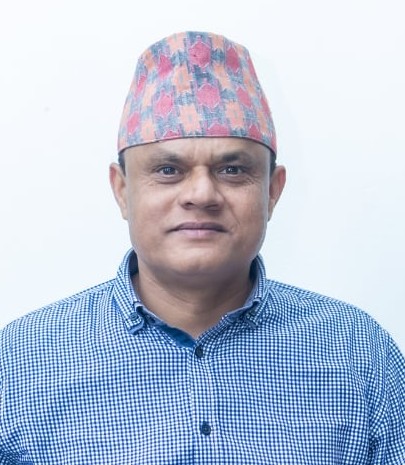
The B.Sc. CSIT program at P. N. Campus has got well experienced faculty members with professional expertise in their relevant subjects/fields. They are capable in research skills and methodologies as well as in monitoring the program. The administrative team includes: Campus-Chief Prof. Dr. Hari Prasad Pathak, Asst. Campus Chief (Science) Dr. Bijay Bahadur Thapa and Program Director Mr. Chudamani Subedi.
Details of Teaching Faculty Members
|
SN |
Names of the Faculty Members |
Designation |
Academic Qualification |
|
1. |
Chudamani Subedi |
Asst. Prof. (Program Director) |
M.Sc. |
|
2. |
Rohit Baral |
Asst. Prof. |
M.A. In English |
| 3. |
Tara Bahadur Thapa |
Asst. Prof. |
M.Sc. CS |
|
4. |
Puspha Nidhi Amgain |
Asst. Prof. |
M.B.S./M.A. |
|
5. |
Gyaneshwor Dhungana |
Teacher |
M.Sc. IT |
|
6. |
Devi Lal Timilsina |
Teacher |
M.Sc. IT |
| 7. | Arjun Poudel | Teacher | M. Sc. |
| 8. | Dr. Thakur Prasad Upadhya |
Teacher |
Ph. D. Data Science |
|
9. |
Nilam Thapa |
Teacher |
M.C.A. |
|
10. |
Binod Adhikari |
Teacher |
M.Sc. (Communication and Knowledge Engineering) |
Details of Administrative Staffs
|
SN |
Names of the Staff |
Designation |
Academic Qualification |
|
1. |
Nirajan Bahadur Thapa |
Head Technical Assistant (Lab) |
Bachelor Degree |
|
2. |
Hem Raj Thapa |
Head Technical Assistant (IT) |
Master Degree |
|
3. |
Mohan Bahadur Khadka |
Office Helper |
S.L.C. |
Along with improvements in infrastructure, the program has reached its current state through gradual advancements. The first batch of the students of this program completed the whole courses in the year 2077. By the year 2082 B.S., a total of 81 students had graduated from this program.
Location: Located in the northern part of panoramic city of Pokhara, Prithvi Narayan Campus spreads over an area of 36 hectors (over 721 ropanis) on the banks of the the Seti River. The place is easily accessed as it boarders the main street that passes through the city from south to the north. The premises with rich greenery have been an integral part of the campus to provide pleasing environment
Classrooms: Spacious, airy classrooms with comfortable furniture provide its students with conducive environment for learning.
Library: The Western Regional Library, established in 1983, is situated on the campus premises. It has got wide ranges of text books, reference books, magazines, and newspapers. Students can borrow books from the library on their choice. The library has now set up e-library, providing various e-resource sites.
ICT Centres: Computers are available for student to use in the campus in 3 places: in the library, in the BBA Programme block and in the research cell. The centres have optical fibre internet facility that is readily available especially during the campus hours. Science Laboratory: The campus has two buildings for well equipped science laboratory where students can exercise their inquisitive minds. They are involved in a variety of laboratory-based research in biology, chemistry, physics and life science. Cafeteria: The campus cafeteria is easily accessible. Students, and both teaching and non-teaching staff can have breakfast, lunch or varieties of refreshment. A wide range of freshly prepared dishes are on offer at reasonable prices. Friendly environment, prompt services, and maintenance of good hygiene are some of the special features of our cafeteria.
Space for Sports: Considering the dictum, “A sound mind in a sound body”, the campus has provided enough spaces for games and sports. Students can choose from volleyball, basketball football, lawn tennis, hand ball and even to cricket within the campus compound. Athletics and martial arts can also be enjoyed on the premises.
Health Centre: The campus has its own Health Centre that provides reliable comprehensive health service with the provision of specialist facilities. Students as well as the staff can make full use of its services.
Student Hostels: The campus has four hostels for students, which are categorized as Girl’s Hostel, women’s Hostel, and a Boy’s Hostel. There is another boy’s hostel for the students of science faculty. Staff Residences: Living quarters on the campus premises are in high demand, but are of limited supply. Both teaching and non-teaching staff have been facilitated with quarters on the basis of seniority. With less than a five-minute walk to classes, library, and offices; living on the premises is an option for a convenient life.
Vehicle Parking: There is a spacious parking area near the campus entrance. A roofed space has been provided for bike stand and an open ground for cars.
|
|
Program Director Chudamani Subedi 9846026411 |